



How to Teach Guitar To Beginners
Professional Guitar Teachers all over The World use this system
If you join them your students will.......
1. Learn the Best Eight Guitar Chords for Beginners
They will also.........
2. Become able to move easily between the shapes in time to music
When they can do this they are successfully playing guitar!
It really is that simple!
Below you can see a simple but incredibly effective scheme of work that is guaranteed to get students off to the best possible start on guitar

Beginner's Stage Guitar
The first six free lesson plans outline a tried and tested method for taking a student (or a group of guitar students) through the beginners stage of learning
Beyond The Beginner's Stage
Guitar Lesson Plans 5 and 6 look beyond the beginner stage and provide a solid framework for further progress on the instrument
You can download ALL of the Printed Handouts as well as the Backing Tracks with Chord Charts and FREE Lesson Plans etc required to turn an absolute beginner into a functioning guitarist as well as a whole load more resources aimed at intermediate and advanced students from this websitefor a "one off" fee of $25.00
It's not all about absolute beginners
We also offer loads of resources geared towards more First Six Guitar Lesson Plans students You can tour the site to take a look at materials covering more advanced subject areas such as Guitar Music Theory or Developing Songwriting Skills on Guitar
Developing a strong teaching framework
The remainder of the material on this page looks at how a guitar teacher can easily develop a framework that can be used to introduce key concepts such as developing a "vocabulary" of basic guitar chord shapes and the ability to change between those chords effectively
After that a teacher can then set out to introduce other themes and topics such as single note solo lines and more "advanced" technical and theoretical areas like Power and Bar Chords.
You can Download the First Six Guitar Lesson Plans FREE if you just continue to scroll down this page

A First Guitar Lesson
The first guitar lesson looks at having a student develop the ability to move between the first two chords (G and Em) that they need to learn in time to music
The Lesson in more detail
Get More Lesson Plans

Download a whole series of free guitar lesson plans designed for an absolute beginner (by far the most common type of guitar student)
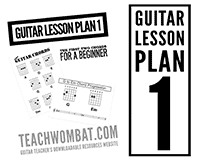
Guitar Lesson Plan 1
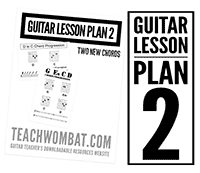
Guitar Lesson Plan 2
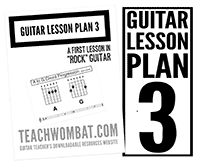
Guitar Lesson Plan 3
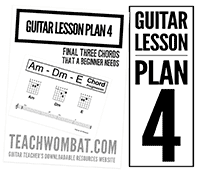
Guitar Lesson Plan 4
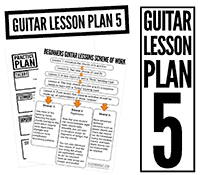
Guitar Lesson Plan 5
This one is a really important one!
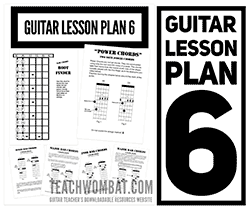
Guitar Lesson Plan 6
Lesson Plan 6 is not so much a lesson plan as the jumping off point for a student to make the move from being an absolute beginner who has been working towards forming and strumming simple chord shapes to someone who has a plan that will help turn them into a well rounded and competent musician
This simple system can be enough to set you up for a lifetime of teaching beginner and intermediate level guitar players
Stay on this page for advice and a whole load of Free Guitar Teaching Resources
Teaching Children to Play Guitar
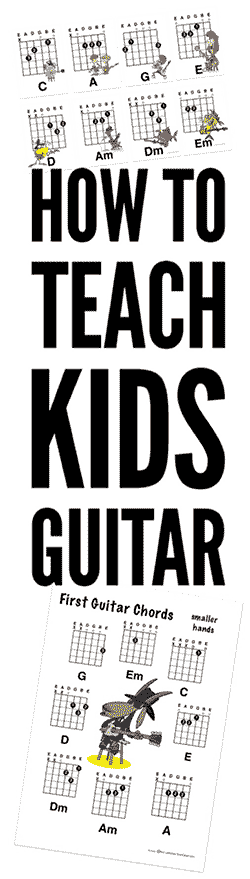
If you specifically want to Teach Children to Play Guitar the same material needs to be covered (moving between the "right" chords etc) but the presentation of that material should be approached differently with the emphasis being placed on having fun
This site has a range of resources dedicated to teaching kids to play guitar with a range of child friendly handouts, backing tracks, certificates of achievement and chord charts
Follow the link below to find out more......
Download all of the guitar teacher's resources that you see on this website for just $25.00
Why Are The teachwombat Guitar Teacher's Materials So Inexpensive?
I have been told on more than one occasion by folks who understand the way online marketing works that I should split the resources on this site into a series of $25.00 packs
They tell me that each pack could cover stuff like kids stuff, adult beginner's, intermediate/advanced and jazz guitar materials, music theory resources and ukulele teaching stuff and that way I would get to earn more money
The folks who tell me this are probably right but to be honest I just don't want to do it
I'd rather give somebody a bargain than a feeling that they spent twenty five bucks on the "wrong" package and to get absolutely everything that would be useful to them they have to stick their (digital) hand in their (actual) pocket again and again
This may change in the future but at the moment I love the buzz that I get when somebody who bought my stuff gets in touch to say that "they can't believe how much material there is included in the download""
Everything that you need in order to start (or improve) a guitar teaching business For a "one off" payment of $25.00
The First Eight Beginners Guitar Lessons
The following material is an examination of the way that you might choose to structure a series of eight or so guitar lessons to an absolute beginner (by far the most common type of student encountered by guitar teachers)
Leaving the "art" to one side for a moment it might be a good idea to take a look at the physical act of playing the guitar and to distill that act down to a couple of "first principles"
It is important for you as a teacher to develop an understanding of what your student expects from the first few months of guitar lessons
When someone can't play the guitar at all they will most probably be delighted if after a few lessons they can develop.........
1: The ability to change between chord shapes with the fingers of the left hand
2: The ability to strum those chords (in time to music) with the right hand
The focus of the first few months of lessons should probably revolve around the "big idea" of having your student master the left (fretting) hand fingering and and some right hand strumming patterns for a set of guitar chords that are the easiest to form and which along with some right hand strumming patterns will allow them to play thousands of songs
Acheive this and it is very likely that not only will the student be delighted with their progress but that you will continue to get paid
The First Beginner's Guitar Lesson
The first lesson will be covered in some detail because it forms the template for a great many guitar lessons to come (using the same basic principles and methods but with different chords and more complex strumming patterns)
All you need to do as a teacher is to present your student with either new chords (drawn from the eight on the "first guitar chords" handout) Or use the chords that they already know from the sheet presented in different combinations and with more involved tempos and rhythms
Although the series of lessons presented on this page supposedly concerns itself with the "first eight lessons" the truth is that I have probably set out do cover too much ground in order to demonstrate the potential of the materials that I'm trying to sell to you (sorry!)
The (happy?) reality is that the vast majority of guitar students will be more than occupied for the first few months of study by engaging with variations on the first lesson plan (gradually introducing more chords and more complicated strumming patterns to be played along to a range of learner friendly backing track (did I mention that our download contains a whole load of backing tracks?)

Talk to your guitar student and help them to understand why, although it is a very important area of study you are going to ignore Guitar Music Theory in the early stages
Before you get straight into the meat of the first lesson it is a good idea to talk to your customer about what the problem is (the "problem" is that they can't play guitar yet) and how the two of you are going to combine in order to solve that problem
People like to know what's going on and like to feel that education is a process that they participate in rather than something that is "done to them"
Ask them how they feel about the idea that the first lesson will set out to create a situation whereby your student will be able to ...........
1. Understand the two areas (theory and technique) involved in the mastery of any musical instrument
2. Learn the shapes of two of the chords (G and Eminor) most suitable for a novice guitar player
3. Play those chords in time along with a (supplied) backing track
Helping students to understand why Guitar Music Theory takes a "back seat" during the early stages of learning to play guitar
After getting the guitar in tune take time at the start to tell the student that in order to play any musical instrument (not just the guitar) properly involves a mastery of two important elements. These two elements are the "Theoretical" and the "Technical" aspects of musicianship
How to Teach Guitar
Music Theory and why it takes a backseat in the early stages
Element 1 Music Theory
Music Theory covers some of the following questions.........
Which notes do I play?
Which scale will fit over a particular chord sequence?
Which chords sound good together and why?
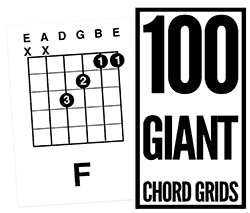
All of these areas should and will be covered but in the early stages of learning guitar music theory should take a bit of a "back seat" and I tend not to introduce any theory until a student can handle the chord of F shown in the illustration above
The chord of F should not be introduced until students are able to move between the eight chords studied at the beginning smoothly and in time to music There are backing tracks and chord sheets in the download that support this "intermediate" stage of learning too
Get some free guitar music theory resources
Element 2 Developing a Technique
Guitar Lesson 1
The First Guitar Lesson
Before the lesson gets underway you may like to mention to your student that Music Theory For Guitar is very important to a musician and let them know that the type of questions posed above will be discussed during future lessons but that at the moment there is very little point in knowing which notes and chords you would like to play if you can’t physically play them!
For that reason it's a good idea to let them know that the first lessons tend to be taken up with developing a physical capability on the instrument.
Download a free lesson plan for this session
Guitar Lesson 1
Lesson Objective:
Move between the G and Em chord shapes strumming in time to music

At the beginning of the session give your student the handout (shown above) that features the G and Em chord progression.
If you are teaching younger children to play the guitar then see our lesson that covers the same ground in a more child friendly and fun way
Explain how the chord diagrams work and make sure that they know that the numbers inside the black dots on the handout refer to the fingers used to hold down the strings.
Ask them to refer to the handout, slowly form each chord in turn and strum it once in their own time.
Depending upon the individual this may take a little while.
During the lesson work toward a situation where the student can change between one chord and the next one
The idea is that the pupil develops an ability to remember the fingerings and play them without continued reference to the handout.
The handouts are great (I would say that I’m trying to sell them to you!) but it’s no good if the knowledge stays on the paper! Let the student know that what we are looking for is a situation where the chord names and the fingerings are available for instant recall.
When these changes are reasonably secure let the student hear the backing track “G Em”
You can hear a short snippet of the backing track which features drums and a bass player repeating the sequence for a couple of minutes.
Now ask the student to strum a single chord as each change comes around. The idea behind this is that having played a single chord the novice player has time (almost two bars) to get ready to fret the next one.
If you have not already done so I would again suggest that you take a look at the video above to see (and hear) this lesson in action
Some students will adapt to moving in time between the chords fairly quickly whilst others will take a little time to get to grips with the fingerings involved.
Now (when they can move between the two chord shapes) may be a good time to talk to your pupil about the following notion......
“You don’t learn to play guitar "during" guitar lessons-you learn to play "between" guitar lessons”
If an individual was able to play everything presented to them perfectly by the end of the lesson then it can be argued that the material was pitched way too low.
The object of a good lesson is to give the student a desirable (and achievable) outcome that they can work towards between sessions. If you explain this to them and have them understand it then they tend to feel a little less frustrated that they don’t play everything perfectly straight away.
For the students who pick up the changes early it is possible to introduce more involved strumming patterns or even to introduce material from the second lesson (where the chords of C and D are introduced).
It is also a good idea at this stage to be careful to restrict the strums to the early part of the first bar of each chord so that the learner will continue to have time to move between the chord shapes (again see the video above for more information).
Towards the end of the session give the student a copy of the backing track on CD or you could even email the mp3 (all of the backing tracks are just standard mp3's) for private study (this usually goes down very well!) and ask them if there is anything that they do not understand about the material studied.
Guitar Practice Plans
One of the PDF resources in the download is a blank practice plan (see example below) that you can fill in near the end of the lesson that lets them know what to spend time on before the next session
If you want to know more about the three areas that a guitar teacher needs to concentrate on during lessons then follow the link to a page that looks at what happens when the first milestone is reached and a student can move between the eight beginners chords in time to music
This one relates to this first ever guitar lesson and as we are engaged in the very early stages there is no need to involve music theory or the development of repertoire

Towards the end of the session give the student a copy of the backing track on CD or email the mp3 (all of the backing tracks are just standard mp3's) for private study (this usually goes down very well!) and ask them if there is anything that they do not understand about the material studied.
Finally: Check that your student knows what to practice (changing between the chord shapes and strumming along to the backing track/s) before the next meeting
Stay on this page to see lesson plan number two but before that please forgive me while I try to sell you something...

Explainers
Print 100 Giant Chord Grids
Children's Guitar Teaching Resources'
Teach Songwriting On Guitar
Guitar Lesson Plans
Guitar Teacher's Backing Tracks
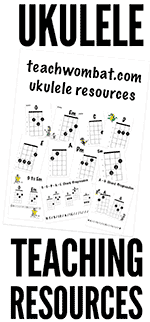
Ukulele Teaching Resources'
Teaching an introduction to Jazz Guitar
Download all of the guitar teacher's resources that you see on this website for just $25.00
Everything that you need in order to start (or improve) a guitar teaching business
Guitar Lesson Plan 2

Lesson 2:
Two New Chord Shapes and More Involved Strumming Patterns
This lesson introduces two new chord shapes (C and D) and then after again working with a backing track that moves between the two chords students are given the challenge of playing all four chords learned to this point (G Em C and D) along with a new backing track
Using exactly the same process as the first lesson have your student learn to form and move between the chord shapes in their own time When they are somewhere near being able to do it then introduce them to the backing track that requires them to move (slowly) between the D and C shapes in time to music
Hear the D to C Backing Track
After that its simply a case of having them combine all four chord shapes into a longer sequence and work with a new backing track featuring all four chords encountered so far
Hear the backing track that features all four chords (G Em C and D) learned to this point
See a video "walk through" of Guitar Lesson Plan no 2
The video will start from Guitar lesson 2
The video looks in greater detail at the last part of the second lesson where all four of the chords learned to this point are combined into a single repeated sequence
Guitar Practice Plan
The practice plan that you give to your student at the end of the lesson may look something like this
"Crocodile Rock" "Stand By Me" "The River" "Dream" "Simply the Best" "Blue Moon" and "Every Breath You Take" are just some of the many songs that can be played using the G Em C and D chord sequence
During the next lesson it may be valuable to spend a little time on a couple of them if only to let your student know that they are making real progress

Guitar Lesson 3

This lesson introduces a new chord (A) whilst reinforcing the students ability to work with one of the chords learned in a previous session. The backing track for this one is more of a heavy rock thing and will work particularly well for students who aspire to be rock players.
This backing track (like all of the others) can also be used by guitar students learning Bar Chords and the handout relevant to this developmet is also shown above.
Beginners can use the track to practice forming the open chords of A and G (again playing single strums with downstrokes of the plectrum). From there they can progress to playing the same shapes with more involved strumming patterns. Later the backing track can be used for power chords (maybe with palm muting?) before moving on to full bar chords ans solo lines.
Depending upon the tastes/aspirations of your student it is possible to keep going with the above system of playing and changing between chords using the backing tracks or to introduce the concept of single note playing for students who are (understandably) keen to develop soloing skills on the guitar
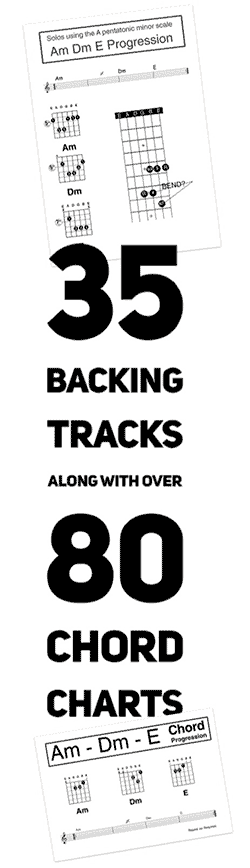
The backing tracks and handouts package features a total of more than thirty five guitar backing tracks and over eighty handouts to go with them based around combinations of the chords that make up The Caged System and by the time that your students have worked their way through even half of them they will no longer be beginners. The backing tracks can also all be used to develop players who are at a more advanced stage by using them to develop capabilities with bar chords and soloing etc
Click below to hear a short snippet of the backing track that accompanies this lesson
You can also download the free detailed plan for this lesson by following the link below
Here is a video "walk through" of Guitar Lesson Plan no 3
The video will start from Guitar lesson 3
The video looks at introducing a new chord shape (A) drawn from the eight chords that any beginner should learn to move between first and also serves as an acheivable introduction to "rock" guitar styles
Download all of the resources that you need in order to start (or improve) a guitar teaching business
Guitar Lesson 4

Guitar Lesson 4
The Am Dm and E Chord Shapes and more involved strumming patterns
Three more chords and a new backing track this time with the chords of Am Dm and E lasting for only a single bar (requiring the student to form shapes a little more quickly)
The basic guitar lesson plan above (using G and Em) can also be used for this lesson. In fact it forms the basis of most of the first few months of study for a novice guitarist. All that is really required of the teacher is that he or she presents their students with a series of tasks which require them to change between the eight caged chords comfortably and at will.
If you ask your customers if they would like to get to the end of (say?) a couple of months of lessons with the basic ability to play thousands of songs (or at least recognisable fragments of songs) then they will probably say that they would be delighted
Giving them the opportunity to develop that ability by becoming able to move between a set of "user friendly" chords will get them there. Perhaps more importantly it will help them to realise that they can actually become guitar players rather than just wishing that they were? this has to be good for your business?
click to hear a short snippet of the backing track for this lesson
Here is a video "walk through" of Guitar Lesson Plan no 4
The video will start from Guitar lesson 4
The video concerns itself with the final three shaped (Am Dm and E) that a novice guitar player should learn first
Download the free lesson plan that accompanies this video for a more in depth explanation of the material covered and the concepts used to this point
Download all of the guitar teacher's resources that you see on this website for just $25.00
Everything that you need in order to start (or improve) a guitar teaching business
Guitar Lesson 5

Where do we go from here?
Lesson 5 gives us the ideal opportunity to assess progress to this point and to plan for the future and if you take a look at the free lesson plan that you can download for this lesson you will see that we are now at an important "staging post" on your student's journey from being a beginner to becoming an intermediate level guitar player
Now is a good time to introduce the "Three Pillars Of Guitar Teaching" (Theory, Technique and Repertoire) and to devise a loose plan for making sure that during the course of lessons to come each area is developed appropriately
The "Three Pillars of Guitar Teaching"
Pillar no 1" Music Theory
Up until this point we have not really involved guitar music theory at all and to be honest it is the least important of the three pillars at this stage as we are engaged in helping our students to further develop the "phsychomotor skills" required to play the guitar
Psychomotor skills are those learned skills that the body can do (such as walking, skateboarding or holding a pen) that the brain does not have to conciously think about while it is happening
Phsychomotor skills (like changing between guitar chords in time to music) can be regarded as being like computer programmes that "run in the background"
The ability to change quickly and smoothly between chord shapes while strumming a guitar is taken for granted because the student has become so used to being able to do it that they do not have to think about it
Music Theory and The Guitar Teacher
I have worked as a pro musician and teacher for more years than I care to admit but I will cheerfully state that I came to truly know and understand music theory by teaching the subject rather than by studying it
Guitar is a strange instrument in that it is possible to make an absolutely wonderful noise with a guitar without really having a clue what you are doing "Proper" instruments like trumpets and pianos require a relatively steep learning curve before they start to make what would generally be regarded as a pleasing sound but with a guitar you can just plug it in (if you are going down the "Rock Star" route) and provided you are in tune knock out a few chords joined together in order to make people (including yourself unfortunately) believe you are much better than you actually are
Most guitarists (and most guitar teachers for that matter) came up through this route and a knowledge of music theory is where things can become a little "sketchy" even in players who routinely function at a very high level in terms of technique and repertoire (the other two pillars of teaching)
I was going to say that I can only speak for myself but the truth is that I have a lot of friends who also teach and they all seem to agree that.....
"Teaching guitar made me twice the player I was before I started doing it"
Pillar no 2: Technique
The first four lessons were about learning eight chord shapes and becoming able to switch between them while strumming
It can not be stressed enough that
THIS IS STILL BY FAR THE MOST IMPORTANT THING THAT YOU AND YOUR STUDENT CAN DO!
Lessons to this point should have resulted in a situation where your student can move between chords in time to music but both you and they will be aware that there is the potential to be so much better with a little more application and practice
The temptation would be to learn more chords but the reality is that they need to get better at changing between the ones that they already know and the download includes a whole load of backing tracks where students are required to spend less time on the chords that they know before changing to the next one Download the lesson plan for Guitar Lesson 5 to find out more
Pillar no 3: Repertoire
Now that your learner can move between chords (even if a little slowly) they are ready to put their newly developed skills into practice by playing their own versions of songs that they know and love This can be one of the most satisfying periods of teaching and learning because it is where they saw themselves functioning when they entrusted you with the task of teaching them to play the guitar
The eight chords learned to this point are the ones used by guitar teachers around the world for decades and they were not chosen at random They are the chords that will allow a beginner to function "best" on a guitar
They contain five of the six "important" chords in the key of G (G Am C D and Em) alongside the chords required to play blues and country in the key of A (A D and E) As if that was not enough the chords of A C D E and G lend themselves to playing (and composing) "Rock" progressions in the key of A
Guitar Lesson 6

Guitar Lesson 6:
Power Chords Bar Chords and First Steps in Music Theory
Guitar Music Theory needs to be useful to a learner NOW!
The material in this part of the website is geared towards having a student become able to form two note "power chords" and to develop the ability to identify where they can be found on the guitar neck (which is where this first use of guitar music theory comes in) You can download the detailed lesson plan below
Power chords (and from there bar chords) are the first "moveable shapes" that our students will be exposed to A moveable shape is a single shape that can be moved around the neck of the guitar in order to produce different chords wheras all of the chords studied to this point (C A G E D Am Dm and Em) have their own unique shape and fingering
It can be a good idea to prepare students for full bar chords by first helping them to become familiar with two note power chords
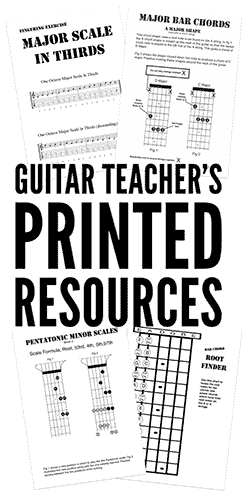
The "Bar Chord Root Finder" handout that you can see in the graphic above can be used to just tell the students where to put their fingers but the sessions dealing with power chords and bar chord shapes are an ideal place to provide our learners with their first exposure to useful guitar music theory
The lesson plan that you can download for this lesson deals with a way to introduce the concepts of how and why notes are names as they are and provides a method by which you can educate a student by asking them questions

The lesson is focussed on having a student develop the ability to form a power chord with the first and third finger of their fretting hand and having accomplished this become familiar with moving that shape around the neck and strum the chord in time to music
The first of these backing tracks is the "rock" backing track used during lesson 3 where students were required to move (slowly) between the "full" chords of A and G
The second track has more chords, involves more rapid changes of position on the neck and allows students to channel their inner "rock god" as its a bit like a familiar rock classic by Jimi Hendrix
Click below to hear a snippet of the track or follow this link to hear snippets of all of our guitar teacher's backing tracks and see some of the handouts and chord sheets designed to go with them
Hey Jimi!
The free lesson plan that you can download for this session (or actually more accurately a series of sessions) provides much more detail than I can here and takes a teacher through the "question and answer" methods of teaching that can be used to help our students take the first step towards understanding basic music theory as it relates to the guitar

Guitar Lesson 7:
Introducing Solos and improvisation: "A New Scale"(Am Pentatonic)
Having introduced an "easy" scale using open strings it might be time to up the ante a little with a one octave Am pentatonic scale (maybe starting at the D string at the 7th fret as shown in the illustration above left)
Back to the Am Dm and E backing track for this one if you like (or the A to G progression for a "rockier" feel?). You could also use the backing track (of which you can play a short sample) below which is just a continuous vamp on an A chord. The lesson comes from our (recently added to the "deluxe Download") intermediate and advanced guitar teacher's backing tracks Whichever progression you choose you can make use of the blank guitar neck and tab handouts so that you can teach individual licks and phrases.

Guitar Lesson 8:
For the sake of convenience and simplicity I am calling this "Guitar Lesson 8" but the reality is that there will probably be many lessons between guitar lesson 5 (which was a recap and planning session) and this one After learning to move between the eight open chords that are best for a beginner to learn students should be presented with other backing tracks from the package that encourage them to change between the open chords more rapidly or use the backing tracks to help develop a facility with power chords and bar chords
Muted Power Chords: "Muting Strings at The Bridge"
Right hand muting techniques (assuming that the student is right handed) with more involved strumming patterns (lots of downstrokes and an even eight to the bar rhythm)
As with the previous session you can use the Am Dm E backing track or the A to G backing track for this one
The lessons above use a combination of our pre prepared handouts and backing tracks
It is important to realise that students vary quite considerably in terms of how quickly (or slowly) they are able to develop skills or take on board information. It is quite possible (even desirable!) that as a teacher you may feel that a particular student might benefit from being introduced to some of the material from the next session. It is equally likely (and indeed desirable) that you might spend more than one lesson dealing with a particular chord sequence or fingering exercise. Please bear this in mind and regard the material presented above as guidelines rather than a rigid structure
Download all of the guitar teacher's resources that you see on this website for just $25.00

Everything that you need in order to start (or improve) a guitar teaching business
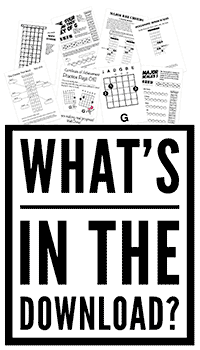
Amongst other things The Download Contains....
Beginners Guitar Teaching Materials
Childrens Guitar Teaching Resources
Printable Guitar Teaching Aids
Backing Tracks and Chord Charts
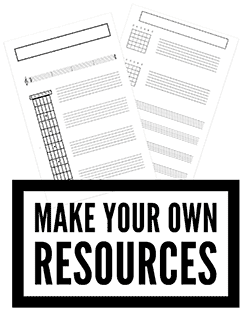
Blank Guitar Necks, Tab and Chord Sheets
Over 450 Sheets and 35 Backing Tracks to Download and use TODAY!
Buy your teachwombat.com toolkits in complete safety via any major credit card (through paypal) or directly through your paypal account if you have one. If you choose to use a credit card, rest assured that we never see your credit card details as paypal do all of that for us.
When Paypal receive your payment you will be immediately invited to click a
"RETURN TO MERCHANT"button.
You will be taken to a page from where you can download the products that you have paid for NOW!
In the (rare) event that something should go wrong with the order/download process just email me at robh@teachwombat.com
I will check the order and send you the links that will get you to your stuff.
Cheers! Rob!